A great way to have children explore spatial relationships is to read books that call for children to think and talk about where objects and people are in relation to something else. Young children show their understanding of these relationships by acting out the stories and moving their own bodies through space. They also use language to describe positions and locations and can make their own maps.
Here are a few of our favorite children’s books that can be great opportunities to start an activity or conversation.
-
We’re Going on a Ghost Hunt by Marcia Vaughan
This Halloween favorite is a variation of the old “We’re going on a bear hunt” story. Children set off on a ghost hunt, which takes them through all sorts of scary places like an ooky spooky swamp and a creepy cave. It’s a fun read, but it’s even more fun to act out the ghost hunt and the helter skelter dash back to the safety of home. Just like the bear hunt tale, children come to obstacles and have to decide whether they go over, under, through or any number of other ways to get to their destination. The more children can immerse themselves with these positional words and act out what they really mean, the better.
-
Over, Under, and Through by Tana Hoban
Another great photographic book by Tana Hoban, this simple yet powerful book lets young children explore those important positional words. Not just those three words, but a host of others words like beside, below, on, and in and many others allow children to hear and examine the many different ways objects can be in relation to others. Pair this with an activity and have children discuss! For one example, watch our Focus on the Lesson video involving an obstacle course in a preschool classroom. Here are related lesson plan ideas from website MathatHome.org.
-
Me on the Map by Joan Sweeney
Having fun with spatial and positional words often leads to fun with maps. Me on the Map is a great entry point for discussing what maps are. And it can become the beginning of children’s experiences in making their own maps!
-
The Secret Birthday Message by Eric Carle
This classic uses shapes and spatial relationships to tell the story of Tim and his quest to find his birthday surprise. The treasure hunt that ensues allows for all kinds of opportunities to work with mapping to represent the world (and a birthday expedition) in the form of a map. Here are more related ideas from the Eric Carle website.
Jan de Lange walks through a few educational math games that are available online. With degrees of difficulty bridging from Pre-K through 8th grade, these games extend the idea of learning trajectories.
Jan de Lange is the founder and director of Jonge Ouder Academie (Young Parents Academy), an institute for parents of children ages 3-7 that facilitates learning at home, complementary to learning at school. He is also an Emeritus Professor at the University of Utrecht in the Netherlands and a past chairman and director of the Freudenthal Institute.
The Early Math Collaborative, supported by the Robert R. McCormick Foundation, held international symposia in 2009 and 2010. The two events brought experts from around the world to share approaches to early mathematics education with teachers, administrators, policy-makers, and other education professionals. The goal was to generate globally-informed ideas and recommendations for improving math instruction in the early childhood classroom. In breakout discussions and plenary sessions, participants brainstormed ideas, identified issues, and recommended actions.
Instructor Lisa Ginet explains how to make tangram puzzles, an ancient Chinese game made from seven shapes cut from a square. Over 6500 different arrangements can be made from these seven simple shapes! Learn more about tangrams and their history.
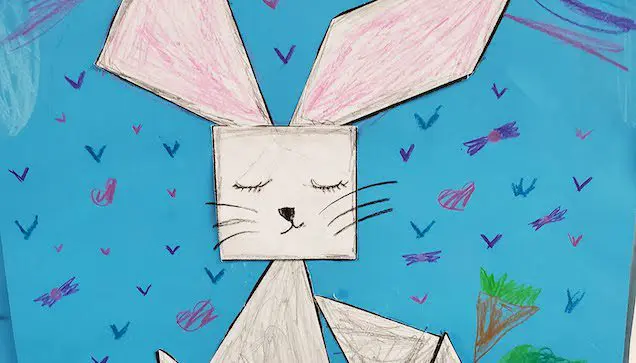
Build Tangram Shapes with Do-It-Yourself Puzzles
Get more ideas for using tangram puzzles with children.
This child flips and rotates triangular prism-shaped blocks to match a given arrangement.
Focus on the Child videos are taken from one-on-one interviews with individual children. The interviews are designed to elicit evidence of children’s mathematical thinking. They are not teaching episodes or formal assessments.
In this video an English Language Learner works through a shape puzzle. Although he hits a roadblock early on and lacks the mathematical language to express the specific shapes he needs, he articulates his ideas through gesture and is able to solve the problem.
Focus on the Child videos are taken from one-on-one interviews with individual children. The interviews are designed to elicit evidence of children’s mathematical thinking. They are not teaching episodes or formal assessments.
Students distinguish shapes using touch rather than sight.
This is part of a longer lesson entitled Feel for Shapes.