Cooking with kids is a natural way to do math together. But we’re not talking about turning meal preparation into a formal math lesson. Cooking together presents an opportunity that is more about noticing and wondering rather than teaching. Think of the kitchen as a place to build children’s intuition about measurement, multiplication, division, and fractions.
Look for these common mathematical structures in the kitchen — equal spacing, equal groups, and partitioning — and then make use of them to figure out the task at hand. Research has consistently shown that drawing children’s attention to mathematical structure helps them to recognize and make use of mathematical patterns in new situations.
Structure is so central to mathematics that we have a Common Core Standard for Mathematical Practice that says, “Look for and make use of structure.”
What is “structure?” The term “structure” in mathematics is the way a mathematical pattern is organized. It is expressed in terms of a numerical, spatial, or logical relationship. Structure is so central to mathematics that we have a Common Core Standard for Mathematical Practice that says, “Look for and make use of structure.” The phrase “look for” suggests that awareness of structure is a habit of mind, a way of seeing the world through a mathematical lens. Luckily, you don’t have to look hard to see mathematical structure in the kitchen!
Equal Spacing
Equal spacing is the foundation for understanding units and measurement. Equal spacing is also an essential prerequisite for fractions and data representation. Guess what? It’s important for baking, too. Imagine how you drop cookie dough on a baking sheet or arrange frozen foods on a tray. Visualizing how to evenly space food and fit it within a given space is important mathematical thinking and can add to any kitchen math opportunities.
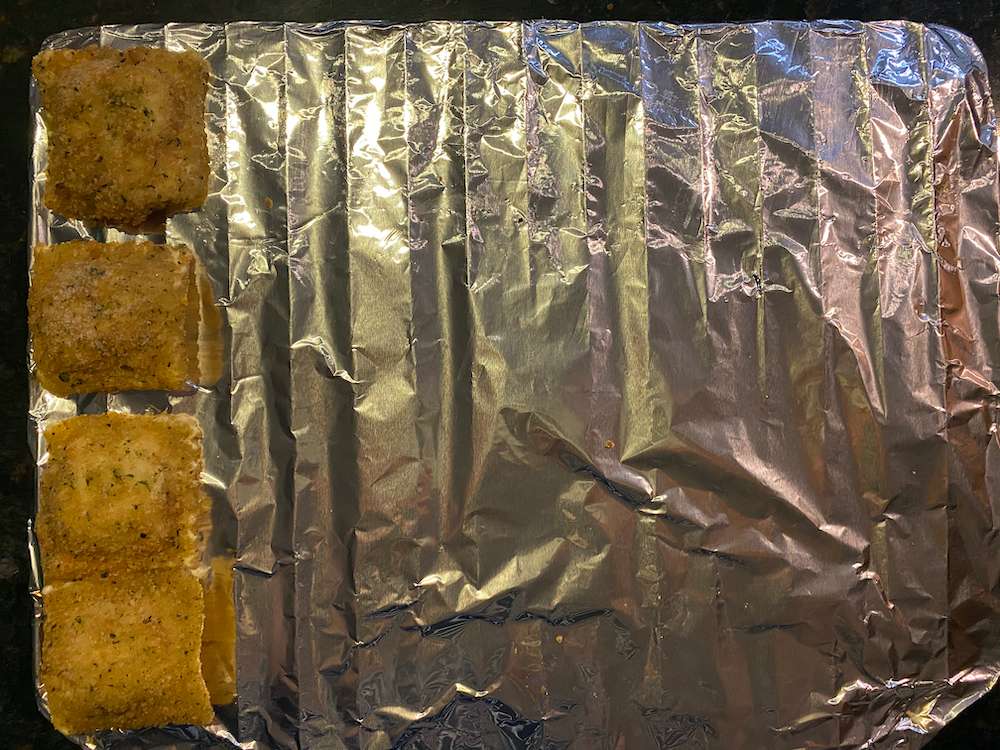
Here’s how a mom of young boys explored equal spacing in her kitchen one day.

Boy, I have fussy eaters who don’t like eating the same thing. I have very little time to cook for them separately. So two kinds of ravioli had to fit on the same tray. I called the boys and asked them how they thought we could do it.
I couldn’t believe how much math talk we had. How many ravioli will fit along the bottom? How many ravioli will fit going down the side? Could we add an extra row?
The boys had their own questions, too. How come we had more left over of one kind? How will we remember which ravioli are which? Then we got into counting the rows and columns.

Equal Groups
For young children, counting objects one-by-one with accuracy is a big achievement. However, counting objects individually is gradually superseded by counting equal groups. The structure of equal groups is the foundation of our base-10 number system and the basis for multiplication. The kitchen provides plentiful ways for you to help children recognize and count equal groups. Here are just a couple.
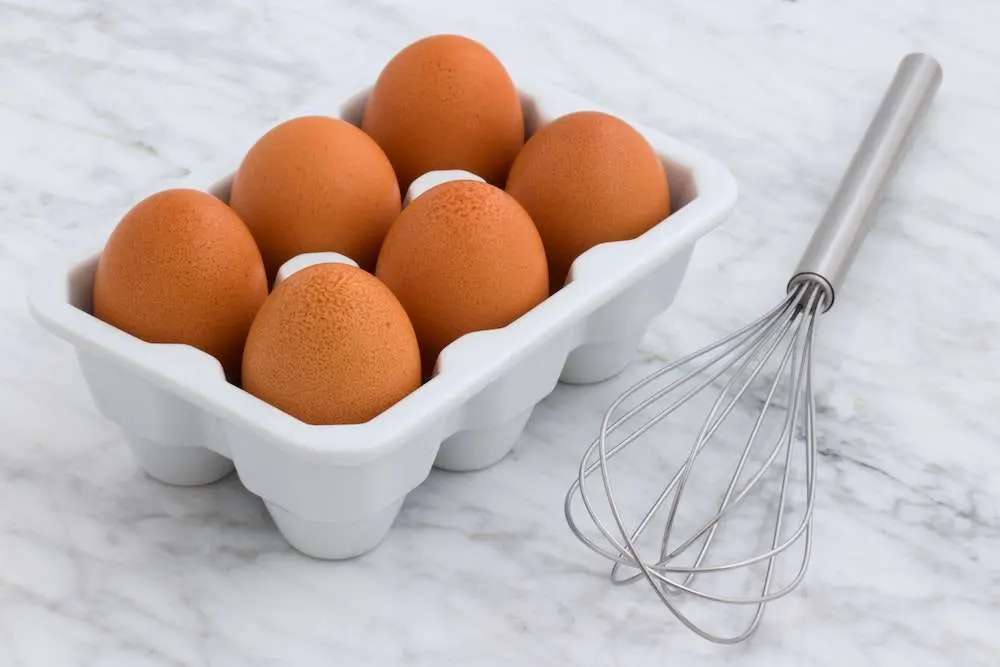
- Count the rows or columns in a grid array. We can structure our counting by noticing equal rows and columns. Think of muffin tins, egg cartons, and drink containers that come in 6- and 12-packs. We can invite children to count the rows and columns as units rather than count each object. Counting by 2s, 5, and 10s are typically the first structured counting sequences that children use.
- Counting out equal portions. We can ask children to put 5 strawberries in each bowl and then count the total number by fives. If everyone gets two cookies, how many cookies will we need? Sharing food provides many opportunities to count equal groups.
Partitioning
Partitioning occurs naturally in many kitchen math contexts, including cutting equal-sized pieces, sharing portions of a whole, and fractions. All of the structures discussed here are closely related. You will find that partitioning often requires the construction of equal spacing or equal groups. We’ve all heard the common complaint from a child, “You got more than me!” Use children’s concern about “fairness” to motivate their mathematical thinking and involve them in the partitioning and sharing of food.
Knowledge of fractions is needed to follow a recipe. Young children won’t be familiar with the formal symbols of fractions but can make sense of equal parts of a whole. Cooking is the perfect opportunity to build intuition about what fractions mean.
Here’s a conversation overheard in the kitchen when a second grader helps make pudding for dessert.
I had my son, Xadrian, read the directions on the pudding box to see what measurement cups we might need. Being a typical 2nd grader, he didn’t actually read the box but skimmed the text over to find numbers and quickly responded, “Four, one, two!”
“Huh?!” I read the directions and noticed he skipped over all the other numbers and went straight to the fraction. “Oh! You’re reading this fraction number. That’s actually 4 half cups and it’s talking about how many servings of pudding we’ll have after we make it. To make it though, we just need 2 cups of milk. Can you take out the measuring cups please?” He brings over the set of measuring cups we use most regularly and hands me the half cup saying, “This one has the one-two like it says on the box.”

“You’re right! That means that when we’re done, we’ll have 4 of those size cups to share with your dad and brothers. That ‘one-two’ is called a half, but to make the pudding, we need 2 cups.” As I say this, I realize that four ½ cups is equal to 2 cups, so I begin to explain that the bottom number of a fraction, the denominator, tells us how many of those parts fit inside the whole (1 cup).“Bring those cups over to the sink and let’s see if that’s true.”
As he begins to investigate, we talk about filling the cups all the way up to the top each time so that all the parts are the same amount (equal). He carefully fills the ½ cup to the top and pours it into the 1 cup, then fills it again and pours it in. The smile on his face is priceless! “Let me try this one,” he beams, as he grabs the 1/3 cup.

I ask, “So how many of these 1/3 cups do you need to fill the 1 cup?”
“Three,” he shouts as he begins pouring.
“Let’s see if that works. We call that a third.”
“It does!” he says and quickly grabs the ¼ cup. “This will be 4!”
“Let’s see! We call that a fourth, or a quarter.”
“A quarter?”
“Yup! Like the coin. How many quarters do you need to make a dollar?”
His eyes open wider as he thinks about it. “Ooooh! Four! So that’s why it’s called a quarter!”
I smile and nod then redirect our attention to the pudding that we have not even started to prepare yet. I say, “So the box says we need 2 cups of milk and you just saw that 2 half cups makes 1 cup. So how many half cups would it take to fill the 1 cup twice, or 2 cups?”
He thinks momentarily and the smile says it all, “It’s 4!”
Any time of year is a great time to get out and see birds, but migration time is when the variety of colorful birds is at its peak. World Migratory Bird Day is officially celebrated on the second Saturday of May in the US and Canada, but many outdoor events and citizen science projects take place all month long. Children are naturally interested in birds, so springtime is the perfect opportunity for early childhood data collection activities.
You don’t need to go far. Birds can be seen on city streets as well as in parks, yards, and nature preserves. You may want to install a window feeder or feeders near your classroom to observe birds up close. Make a list of target birds to look for and keep count. Remind children that birds are hard to spot. Practice staying still and looking for the movements of birds. To develop children’s powers of observation, make DIY cardboard binoculars to help them focus on birds they see.
Let children’s own questions drive your data activities. Whether they are interested in the colors of birds, comparing types of birds or size of flocks, or investigating what kind of birdseed draws the most birds to the feeder, children will explore the Big Ideas of Data Analysis as they collect bird data to answer their questions.
These mathy books for kids will spark curiosity and inspire bird-related investigations:
-
Birds by Kevin Henkes
Birds come in all sizes, shapes, and colors. The simple text and vibrant illustrations of this book invite preschool or kindergarten children to notice the many attributes of birds. What do children wonder about the birds they see?
Get (or make!) a bird guide. Bird guides can be fun to review before going outdoors as well as once you spy birds. Figure out how your bird guide is arranged. Is it according to the different families of birds or by their colors? You may even want to make your own bird guide with children’s own illustrations and descriptions of when and where you can find the species you see.

-
Bird Count by Susan Edwards Richmond
In this Mathical-award winning book, we read about a young girl who participates in an annual census of birds in her community. Her excitement for finding the various species she sees is contagious. As her count grows with each turn of the page, we see her handwritten tallies, and children can notice how she makes groups of five for efficient counting.
Turn birding into a scavenger hunt with a goal: To see as many birds as possible. For younger children, counting up to a target number—5 different kinds of birds, for example, or 20 birds in one outing—will be enough to stay focused and have fun. For first- and second-graders, data collection activities can be more formal with tally charts and adding counts over several days, including birds they see with their families over a period of time.

-
Pigeon Math by Asia Citro
Birds on a wire may sound like a cliché number story, but Asia Citro surprises us in her book, Pigeon Math. Another Mathical-award winner, this funny story about pigeons plays around with a familiar urban sight as birds (and a cat!) leave and return to a telephone wire. The constantly changing quantities provide many opportunities to add and subtract.
Have first graders discuss the number combinations within 10 that occur within the story. Then have them write their own pigeon math stories to create a class book! Second graders can do the same with a flock of 20 pigeons or another common local species such as seagulls, geese, or sparrows.

A student stacks cups to organize them by size.
Focus on the Child videos are taken from one-on-one interviews with individual children. The interviews are designed to elicit evidence of children’s mathematical thinking. They are not teaching episodes or formal assessments.
Cindy Collado and her preschool class at Stock School were involved in a shoe project that incorporated many math concepts through a variety of activities over the course of two months. The class started by taking a good look at their shoes and then talking and thinking about what they saw. They soon discovered that there were all kinds of way to sort them depending on how they were going to put them into sets according to the attribute they zeroed in on: color, type of shoe, and even shoe size. The children realized that they could represent and compare the size of the sets within each sort by graphing them. One group of children decided to make a bar graph to show types of fasteners, while a second group got a very different result when they graphed the same collection by color.
The sorting quickly led to a related algebraic concept as the class created patterns with their shoes (pink, white, brown) and made a “pattern train.”
Ms. Collado confirms that this truly was an idea that works: “The whole project was amazing as the kids began to initiate patterns and describe shoes – all of a sudden math concepts became part of all of our daily language without us realizing it.”
A child directly compares the lengths of two crayons to determine which one is shorter.
Focus on the Child videos are taken from one-on-one interviews with individual children. The interviews are designed to elicit evidence of children’s mathematical thinking. They are not teaching episodes or formal assessments.
A child explains the attendance chart he uses in class.
Focus on the Child videos are taken from one-on-one interviews with individual children. The interviews are designed to elicit evidence of children’s mathematical thinking. They are not teaching episodes or formal assessments.