When someone says something like algebra begins in pre-kindergarten (or before), immediately others may begin to question their sanity. But the foundations of algebraic thinking do begin with core concepts that take shape early, such as comparing and ordering objects or patterns and the rules they are governed by.
One of the best ways to delve into these concepts is through the books that are read to children each and every day. Below are some suggestions of books that may inspire you to explore algebraic thinking with your children.
-
Rooster’s Off to See the World by Eric Carle
This “Carle classic” tells the story of a rooster who is slowly joined by two cats, three frogs, four turtles, and so on. As the groups of different types of animals come along for the journey, and eventually leave, it sets up a world of opportunities to delve into number operations and patterns.
-
The Napping House by Audrey Wood
The growing pattern in this fun and wildly illustrative story book can bring out some math moments you never thought would happen with younger children. You might find our Focus on the Lesson video Who is Napping? particularly interesting.
-
Is It Red? Is It Yellow? Is It Blue? by Tana Hoban
A lesser-known book that is both simple and without an actual story to tell, this concept picture book allows children to explore colors, shapes, sizes, and most importantly, relationships. It is another wordless book that encourages an examination of relationships that words themselves often aren’t best in doing with very young children.
-
I Know an Old Lady Who Swallowed a Fly by Mary Ann Hoberman
When an old lady swallows a fly, a problem slowly builds. It is a charmingly silly tale that children get a kick out of. Although it can often result in a simple lesson about not eating just anything, the telling of this folk tale can result in an exploration of a cumulative or growing pattern.
What is pattern? And why is it important that children explore patterns at an early age? And just as important, is pattern more than just colors and AB repeating patterns? Yes, it is.
Pattern means that there is a relationship with some sort of regularity between the elements. These could be objects that have a pattern, but they also could be numerals, sounds in a song, or even concepts or ideas. Even “If, then” statements are a type of pattern. Pattern awareness is considered early algebraic thinking as well as an important stepping stone to logic and logical thinking. Which makes it very important for early learning.
It is essential that children explore pattern beyond just the one or two attributes that are often used, i.e. color. It’s more than just alternating colors! Just like we want to promote seeing numbers in different ways, it is helpful for children to see that patterns arise using different attributes. The example we give in our Big Ideas in Early Mathematics is one of song. A teacher claps her hands and taps her feet to a song in a basic AB repeating pattern. Then a child connects that pattern to a colored block train that she made recently, also in an AB pattern. Between the sound and movement and the colored objects, the child finds an equivalency of a pattern. That brought upon a conversation with the teacher that was full of rich pattern thinking. Why was it important? Having one thing stand in for another thing is the beginning of algebraic thinking and algebraic representation. Naming of these patterns helps children to recognize the relationships between patterns that may have different physical embodiments but ultimately are equivalent.
It’s also important we explore pattern beyond these AB repeating patterns we often see in the early grades. If we emphasize only alternating AB repeating patterns with young children this can result in some children with the idea that “red, blue, blue” can’t make a pattern. If we explore the idea that any pattern must have a “rule” that it abides by, then children can begin to see different patterns in the world and even eventually think about and discuss what the rule may be for the pattern they see.
The discussions children can have about pattern can go a long way towards helping children see pattern as dynamic, both in the attributes that can be involved and the rules that they have.
Cumulative tales and rhymes such as The Napping House illustrate growing patterns, typically an increase or decrease by one on each page. As the growing pattern is revealed through the story, children get excited because they can figure out “what comes next.” Suddenly a nice pattern book for kindergarten or preschool becomes an adventure. As we point out in our book Big Ideas of Early Mathematics, children are naturally “tuned in” to patterns, which can deepen their understanding of them.
Like all patterns, growing patterns feature repetition and regularity. In this case, it’s not a sequence of elements that repeats such as in the AB pattern of a checkerboard, but a quantitative change that repeats. Our counting system is a basic growing pattern because each number is one more that the number that precedes it. The plus-one rule is what brings predictability to our count sequence.
Because children will be so engaged by these stories and songs, you can guide them to notice the growing pattern, using geometric models such as stacking blocks or pictographs to show how each repetition has a constant change in quantity. For example, if you stack block towers in order of size, children will see the resulting stair-step structure of a plus-one growing pattern. Acting outing out the stories and songs is another way to make the pattern structure come to life!
Here are a few of our favorite mathy books and songs that illustrate all the math going on in growing patterns.
-
We Had a Picnic This Sunday Past by Jacqueline Woodson
This tale vibrantly captures an annual family picnic. As guests arrive with food—and Teeka and Grandma dread the arrival of Cousin Martha’s dried out apple pie—a growing story emerges! There are two sets: people at the party and food on the table.
With preschool children, a reader can pause and comment on how there are more people and more food! They may also be interested in sorting the different types of food into binary sorts by attributes such as “food I like” vs. “food I don’t like” or “dessert” vs. “not dessert.”
Kindergarten and first grade children may wish to keep track of the quantity of each set and discover that the change does not always follow a growing pattern – especially when Cousin Trevor comes empty handed, and Teeka complains, “you can’t eat air!” The delicious surprises in this book are a result of disrupting the pattern and are what make it such a rewarding read. After enjoying this fun read-aloud many times, children can write their own growing stories about their families’ traditional gatherings.
-
The Waterhole by Graeme Base
 In this gorgeously illustrated tale of animals convening to drink from a watering hole, author and illustrator Graeme Base takes a counting book and does something magical with it. As each animal comes to drink from the watering hole one by one, the water in it diminishes each time. It is a demonstration of a growing pattern as well as an example of cause and effect, a decreasing or shrinking pattern paired with the growing pattern, and an exploration of volume all in one unique story. What a great way to spark a conversation with children.
-
Two of Everything by Lilly Hong
Not all growing patterns use the same plus-one rule for growing. For children ages 6-8, introducing more advanced growing patterns through books can help provide a context for understanding multiplicative change. Two of Everything is a great Chinese folktale that introduces a doubling pattern with wit and wisdom. You can pair this book with activities that involve input and output such as function machines or in/out boxes. Whatever goes in comes out double!
-
One Grain of Rice by Demi
Another doubling pattern can be found in this Indian folktale, in which a clever girl, Rani, outsmarts a greedy ruler who is hoarding the people’s rice harvest for himself. Despite her hunger, Rani returns some spilled rice to the raja instead of keeping it and is rewarded for her honesty. What payment does she ask for? One grain of rice, but with the condition that the grains of rice will double each day for 30 days. Thinking this a meager amount, the raja agrees and is surprised to see that the reward doubles to more than a billion grains of rice in 30 days! The beautiful illustrations capture the growing pattern in a powerful way as the volume of rice given to Rani takes up more and more of the page, eventually taking a fold-out, 4-page spread to show it all.
A chart at the back of the book shows the number of grains of rice given to Rani on each of the 30 days. First and second graders learning about the units of our base-10 system can practice reading these large numbers. Make a photocopy of the chart, cut it apart, and have children put the 30 days back in order according to the doubling pattern.
-
Songs for Growing or Decreasing Patterns
The classic song Over in the Meadow uses fun animal sounds and a catchy tune to make its growing pattern. It creates a great opportunity to allow children to illustrate what they hear happening in the song and the change that happens with each new verse.
Ten in the Bed is another song that has a decreasing pattern that children love to sing and act out. Imagine an activity that gets kids moving while visually demonstrating how there is one less in the bed while also creating an increasing set of people on the floor along the way. It’s a familiar and fun song that can spark great dialogue around the concepts of constant change.
 In this
Match ‘Em All Directions
The directions for this game illustrate how to play a lotto-type game where children develop subitizing skills, the ability to tell the number of objects in a set quickly, without counting. Using counting and subitizing cards such as these can help reinforce this skill.
Match ‘Em All Game Cards
This set of four game cards can be used individually with one student or with a small group. Each card has different representations of 1, 2, 3, and 4. Dot cubes should reflect the game board.
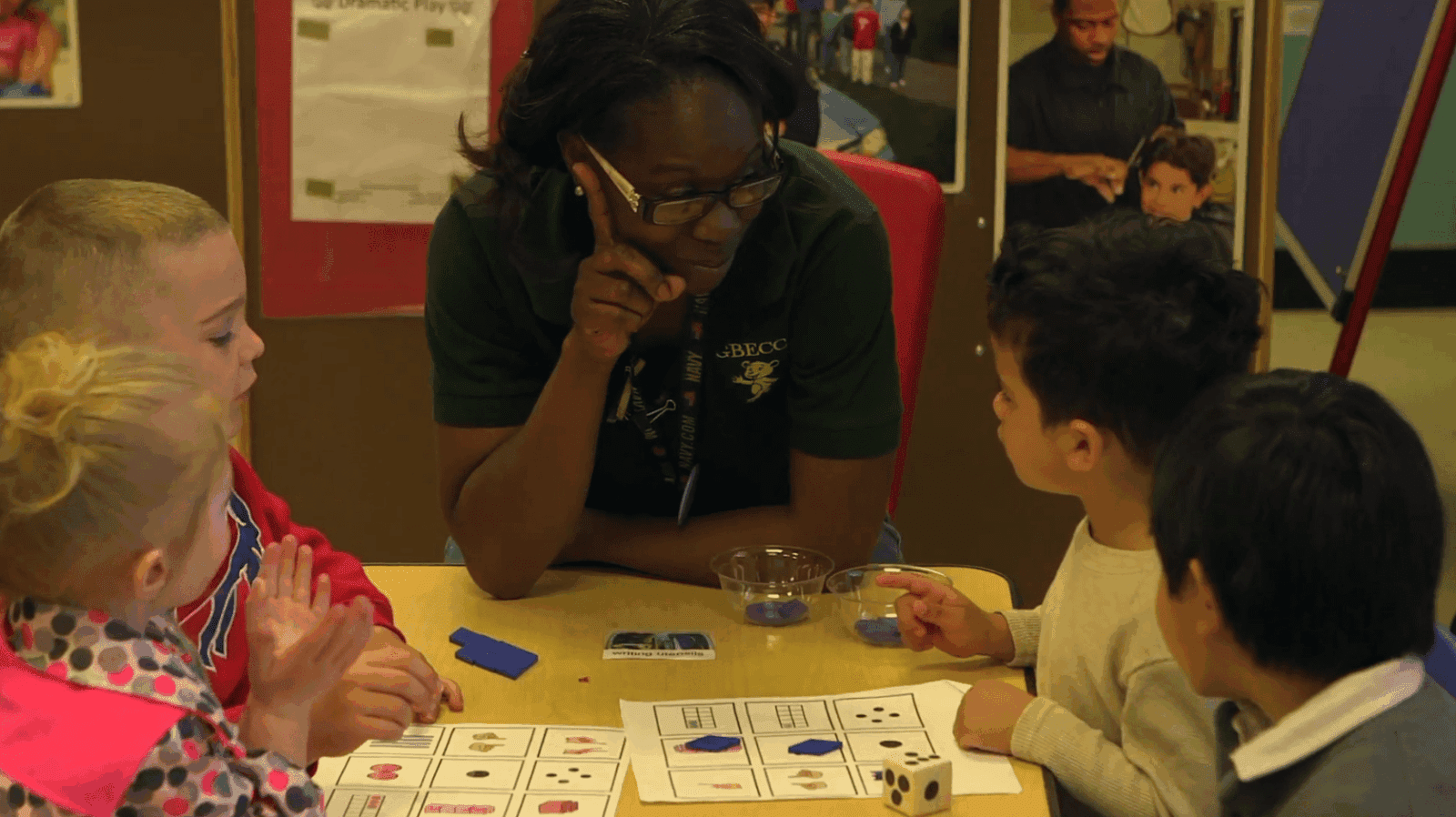
The Match ‘Em All Game Video
In this example video, we see a teacher play the game with children and encourage them to find the math that is going on.
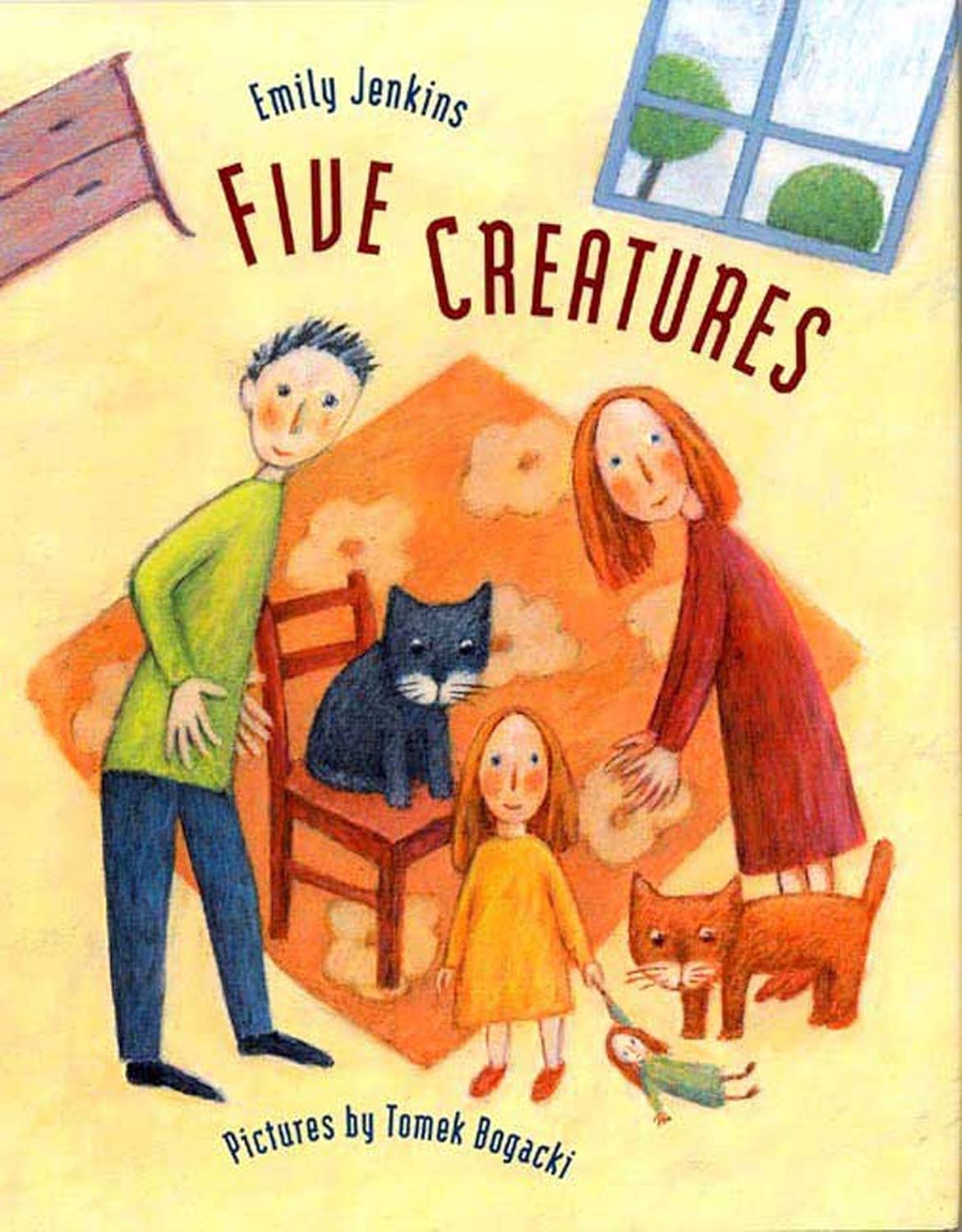
Creatures at Home Directions
In both English and Spanish, the directions here outline how to do an activity at home that can allow families to share in the learning about sets and sorting taking place in classrooms, all tied to the book Five Creatures and aligned with our Big Ideas of math. Children’s books in Spanish or English can be creative springboards for mathematical discovery in the home setting.
Creatures Who Live in Our Homes Class Book
In both English and Spanish, these two book page templates go together to guide parents as they create sorts based on similarities and differences of the members of the family.
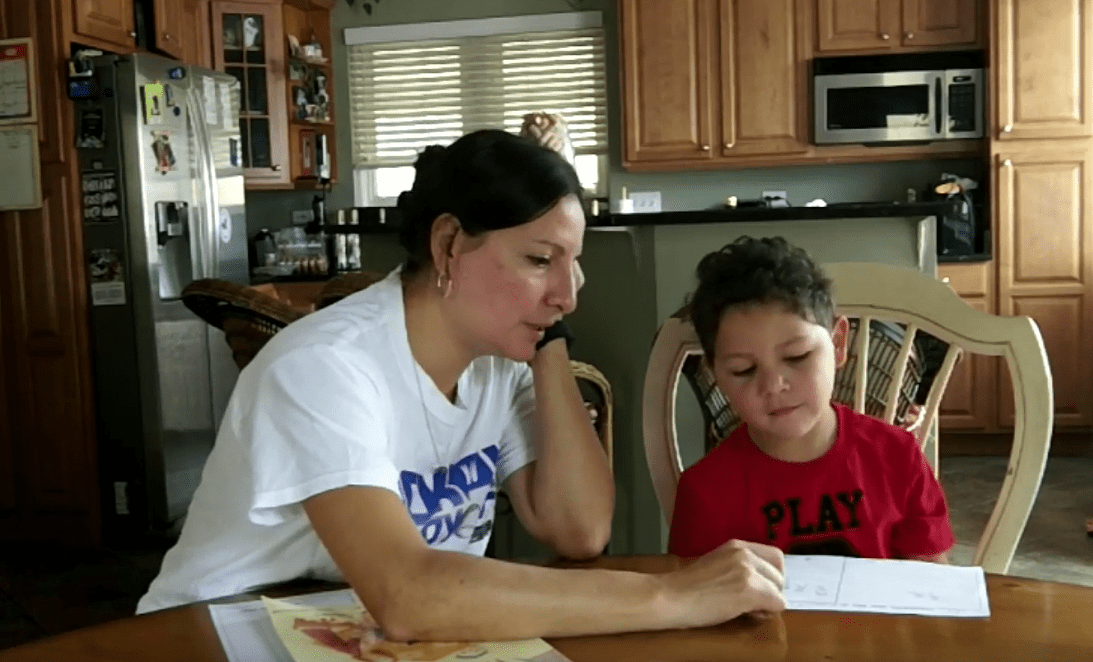
Creatures at Home Video
In this example video, using children’s books in Spanish or English like the book Five Creatures can act as a springboard for discussing sets and sorting at home.
A second-grade student solves a variety of addition and subtraction math stories. Using his fingers as math tools, he is able to solve the stories, even as what is known or unknown shifts. Solving a range of problem types encourages children to make sense of the problem and develop flexible thinking. Here, we see the child strategically select a method for solving each story based on the given numbers.
Focus on the Child videos are taken from one-on-one interviews with individual children. The interviews are designed to elicit evidence of children’s mathematical thinking. They are not teaching episodes or formal assessments.