What Degree You Need to Be an Early Intervention Specialist
Somewhere today, a practitioner is guiding a family through something they never planned for.
Here is what each degree level qualifies you for, and how it fits around full-time work.
What Degree Do Early Intervention Specialists Need
A bachelor’s degree in a related field is where this career begins.
Child development, special education, and social work are common majors.
The Short Answer
Bachelor’s or higher in an approved field
Master’s not required for the DT credential
5 core knowledge areas to complete
90%+ of Erikson students work while enrolled
If you already hold one of these, you may have met the bachelor’s degree early intervention requirement.
Coursework in these fields often covers developmental delays, family centered services, and support for children birth to five.
A master’s goes further for roles that need advanced clinical training.
It deepens your grasp of early childhood development and strengthens your infant and toddler support.
Why the Right Degree Changes Everything for the Families You Serve
A two year old who avoided every texture finally presses her fingers into play dough.
Her mother watches from across the table and lets out a breath she has held for months.

To an outsider, it is one small developmental milestone.
To the family, and the practitioner beside them, it is everything.
How Erikson’s Master’s Program Meets Early Intervention Degree Requirements
You may be waiting because school sounds like one more thing taken from your family and your life.
Erikson’s master’s prepares you for developmental therapist credential eligibility, and over 90% of students keep working while enrolled.
See how Erikson prepares you for a career in early intervention
Early Intervention Specialist Degree Requirements Explained
The path can feel heavy when you already carry a full caseload.
The right degree for early intervention depends on your role, so here is each level.
Bachelor’s Degree Options for Entry Roles
Illinois credentials developmental therapists who hold a bachelor’s or higher in an approved field.
A child development degree or a special education degree can both count.
Service coordinators need a bachelor’s in human services, behavioral science, social science, or a health field.
A current RN license can also meet the requirement.
Master’s Degree Options for Clinical Roles
A master’s is not required for the developmental therapist credential.
Licensed disciplines such as speech language pathology and occupational therapy need a state license.
A master’s can also prepare you to build each child’s plan with an interdisciplinary team.
It is called the IFSP, a cornerstone of IDEA Part C.

Core Credentialing Benchmarks
Illinois asks developmental therapist applicants to show training in five core knowledge areas.
- 15 clock hours each in typical and atypical development, including children birth to three.
- 30 more in each of assessment, intervention strategies, and working with families.
- Coursework can count, since one semester hour equals 15 clock hours.
- Required training includes System Overview and Follow-Up and a global assessment, plus an NPI number.
- You must also enroll in IMPACT, the Illinois Medicaid provider portal.
Working While You Complete the Steps
After a temporary credential, you have 18 months to complete 240 hours of consultation.
That gives you room to keep serving families while you finish.
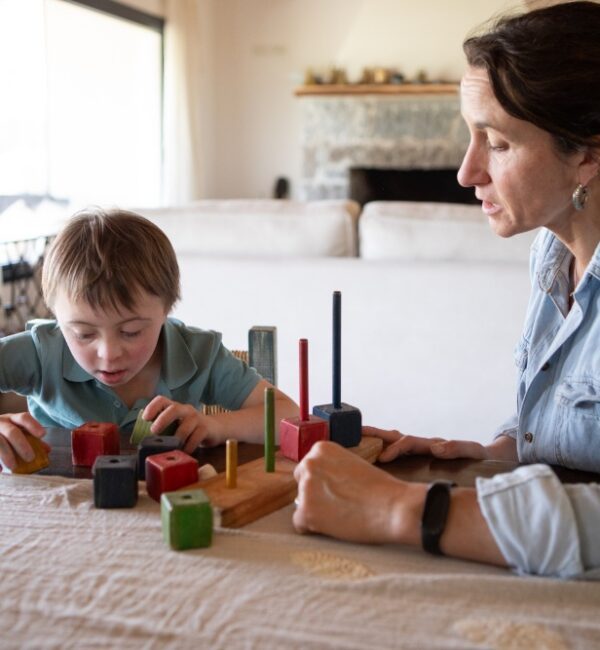
Join the Erikson family with monthly news + events updates shared by academics, community members, and families.
No, Illinois does not require a master’s for the developmental therapist credential. A bachelor’s or higher in an approved field is the starting point.
Yes, both developmental therapists and service coordinators can enter the profession with a four year degree. Confirm that your major matches the approved list for your role.
No single choice is best, though child development is a popular pick. Illinois also lists early childhood education, special education, and elementary education.
Yes, developmental therapists need a credential from Provider Connections. Speech language pathologists and occupational therapists hold a state license instead.
Early intervention study centers on typical and atypical development, assessment, intervention strategies, and working with families. Illinois counts these as the five core knowledge areas for developmental therapist credentialing.




Create a Better Future For Children While Building Yours
Embark on your early childhood graduate program path at Erikson Institute and start changing lives.