What Does an Early Intervention Specialist Do?
A typical day in early intervention brings home visits, coaching caregivers, and teamwork around one shared plan.
Sessions happen where a child already lives and plays. Families lead each step, so no two days look alike.
Here is how one visit unfolds, from planning ahead to sharing progress with the team.
Early Intervention Specialist Job Description at a Glance
An early intervention specialist visits families with infants and toddlers, coaches caregivers, and works with a team. Also called early interventionists, they support children from birth to 3 with developmental delays.
The Short Answer
Visits to families with infants and toddlers
Coaching inside daily routines
One plan shared with a team
Homes, child care, and community settings
Visits happen where a child’s day already unfolds. Specialists meet families on familiar ground.
They then show caregivers how to build support into daily routines, such as meals and play. That coaching keeps progress moving long after each session ends.
Therapists and service coordinators share one plan, so each provider builds on the others’ work. For families, that means consistent guidance and one person to turn to with questions.
Exact tasks vary by role and agency, since federal labor data has no separate occupation for this job.
Why Early Intervention Work Matters to Families
Dinner has quietly become the hardest hour in one family’s day. Their toddler pushes away every spoon, and both parents dread the table a little more each night.
Then someone sits down with them and watches how a typical meal goes. She offers one small idea: let him touch a new food before asking him to eat it.

By the next visit, the table feels calmer, and the family tries it at breakfast too. Small changes inside daily routines can make a whole day feel lighter for infants, toddlers, and their parents.
One idea turned that evening around, and your ideas could turn many more.
How Erikson’s Master’s Prepares You for Early Intervention Work
Erikson Institute’s online master’s builds this work in three steps.
Step 1: Learn how a visit works
Coursework covers assessment and family coaching through an infant mental health lens.
Step 2: Build the practice behind the skill
Internships add 240+ hours with infants, toddlers, and families.
Step 3: Step into the role
Graduates are eligible to apply for the developmental therapist credential.
Early Intervention Specialist Duties Across a Typical Day
In Illinois Early Intervention, duties fall into three areas: the visit, the family, and the team.
Early Intervention Home Visits: From Planning to Wrap-Up
Each visit follows a clear rhythm from preparation to follow-up.
- Planning: Before arriving, the specialist reviews family goals, recent progress, and developmental screening results.
- Coaching: Caregivers practice new skills with their child during daily routines like meals and dressing.
- Setting: Sessions take place in natural environments, such as a family home or child care program.
- Materials: Household items, such as a laundry basket, can become practice tools.
- Play: Activities match the child’s current skills and build toward the next goal on the plan.
- Wrap-up: Each visit closes with a short recap and agreed next steps.
Working With Families in Early Intervention: The Shared Plan
Every choice starts with what matters most to the family.
- Goals: Parents help set the outcomes on the individualized family service plan.
- Family-centered: Services follow each household’s priorities, culture, and weekly schedule.
- Choice: Families select from a list of providers, and the service coordinator makes the connection.
- Check-ins: IDEA Part C calls for a plan review every six months and a yearly evaluation.
- Transition: Planning for life after early intervention begins months before the third birthday.
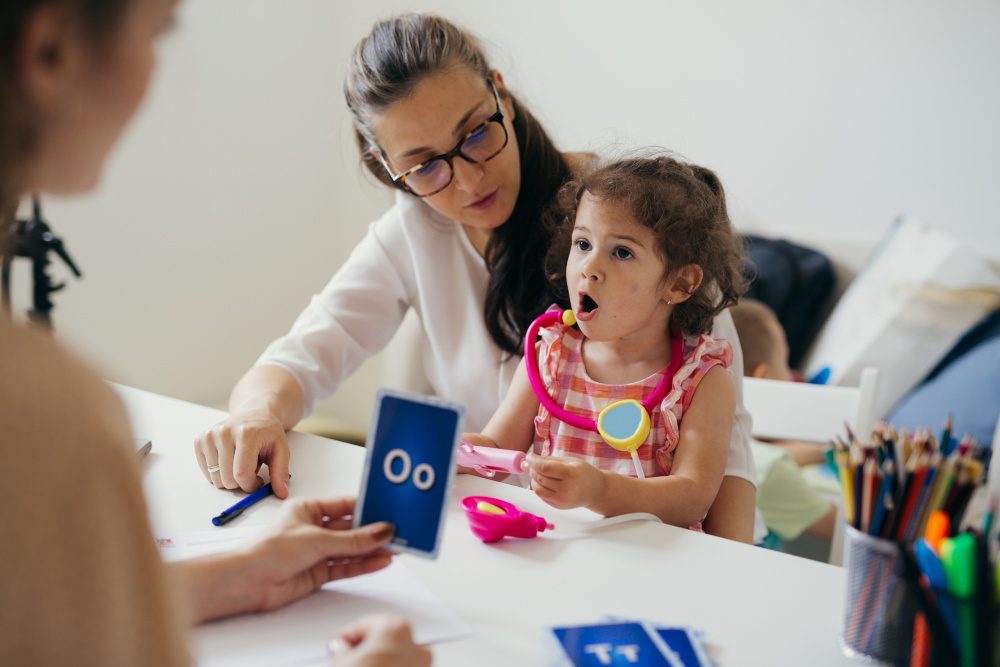
The Early Intervention Team Around Each Child
No two teams look exactly alike, but these roles appear often.
- Service coordinator: Assigned through Child and Family Connections in Illinois, this person is the family’s main contact.
- Developmental therapist: Supports development across thinking, communication, movement, and social skills.
- Speech-language pathologist and occupational therapist: Join when a child needs focused help with talking, feeding, or hands.
- Parents: They are full members of the team and bring daily knowledge of their child.
- Progress notes: Each visit is documented so the interdisciplinary team stays current.

Join the Erikson family with monthly news + events updates shared by academics, community members, and families.
An early intervention specialist supports infants and toddlers with developmental delays and coaches their families. Most of that work happens during regular visits in places where the child already feels comfortable.
Agencies may also say early childhood interventionist or early childhood intervention specialist. In Illinois, developmental therapists and service coordinators often work side by side on each plan.
Whatever the title, the goal stays the same: helping families support a child’s growth.
Early intervention specialists work in family homes, child care programs, libraries, and other community settings. IDEA Part C calls for services in natural environments whenever possible.
Visiting on site shows a specialist how a child’s day really works, so advice fits real life. Families also learn skills in the same places they will use them.
That setting also lets specialists see the real routines that shape each day.
They coach caregivers inside daily routines and set clear, realistic goals together with each family. Parents choose what matters most, and the specialist suggests strategies that fit home life.
Between visits, families keep practicing these approaches during everyday routines. Those moments add up, giving the child many more chances to build skills.
Progress is shared openly, so families always know what is working and what comes next.
The core skills are observation, clear communication, teamwork, and solid knowledge of how young children develop. Patience and flexibility help too, since every home runs on its own rhythm.
Confidence grows with time, and new specialists build it one visit at a time.
A master’s program builds these skills through coursework, reflective supervision, and practice with real families. See how Erikson pairs classroom learning with guided internships.





Create a Better Future For Children While Building Yours
Embark on your early childhood graduate program path at Erikson Institute and start changing lives.