What Young Children Can Teach Us About Being Human
Children do not arrive as empty vessels waiting for adults to fill them. They arrive reaching for relationship—and reminding us what relationship requires.
By Mariana Souto-Manning, PhD, President, Erikson Institute
A toddler notices another child crying on the playground. She stops what she is doing, walks over, and offers the damp cracker she has been carrying in her fist for the last fifteen minutes. It is not an especially appetizing cracker. It may contain sand. But the offering is sincere.
Before she has the language to define empathy, she recognizes distress. Before she can explain community, she moves toward another person. Before she knows the word solidarity, she shares what she has.
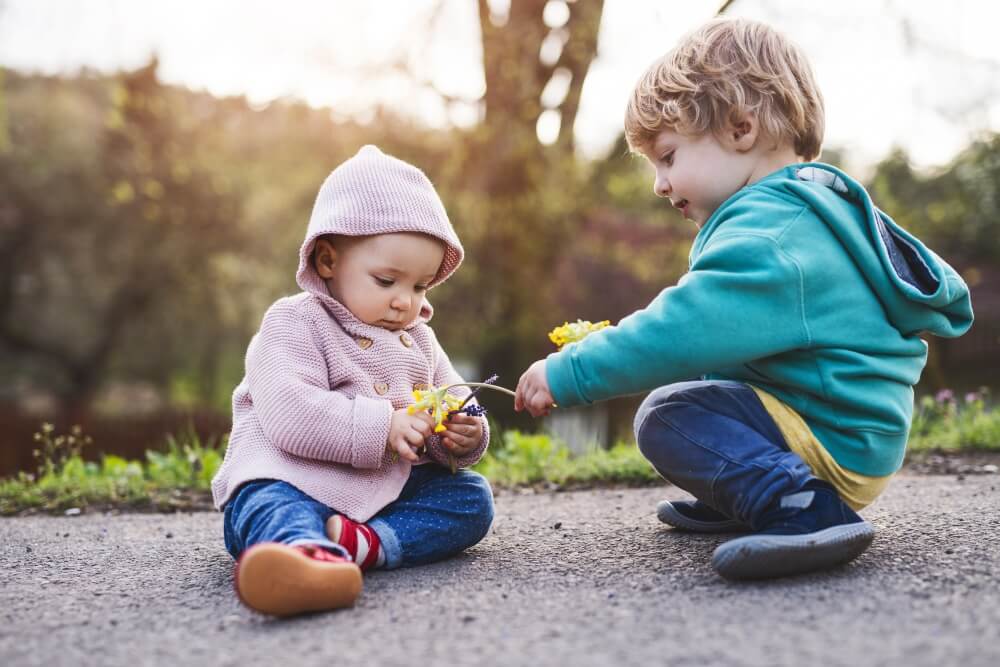
Young children do this all the time. They notice the adult whose voice sounds different. They ask why someone is alone. They bring a blanket to a crying sibling, pat a classmate’s back, save a seat, protest when one child gets more, and announce— sometimes loudly and in the middle of a grocery store—that something is not fair. Their responses are not always polished. Neither are ours. But their moral attention is real.
We often speak about what children need to learn from adults. That list is long and important. Children need protection, language, guidance, boundaries, knowledge, care, and access to the conditions that allow them to thrive. Yet the learning does not move in only one direction. Children also teach us. They teach us to notice. They teach us to return to the question beneath the question. They teach us that a small person can carry a large concern for the world.
The Human Curriculum
Children are students of humanity from the beginning. A baby studies faces. A toddler studies reactions. A preschooler studies the difference between what adults say and what adults do. They learn whether feelings are welcomed or treated as inconveniences. They learn whose pain receives immediate attention. They learn whether an apology is something adults demand from children or something adults are also willing to offer.
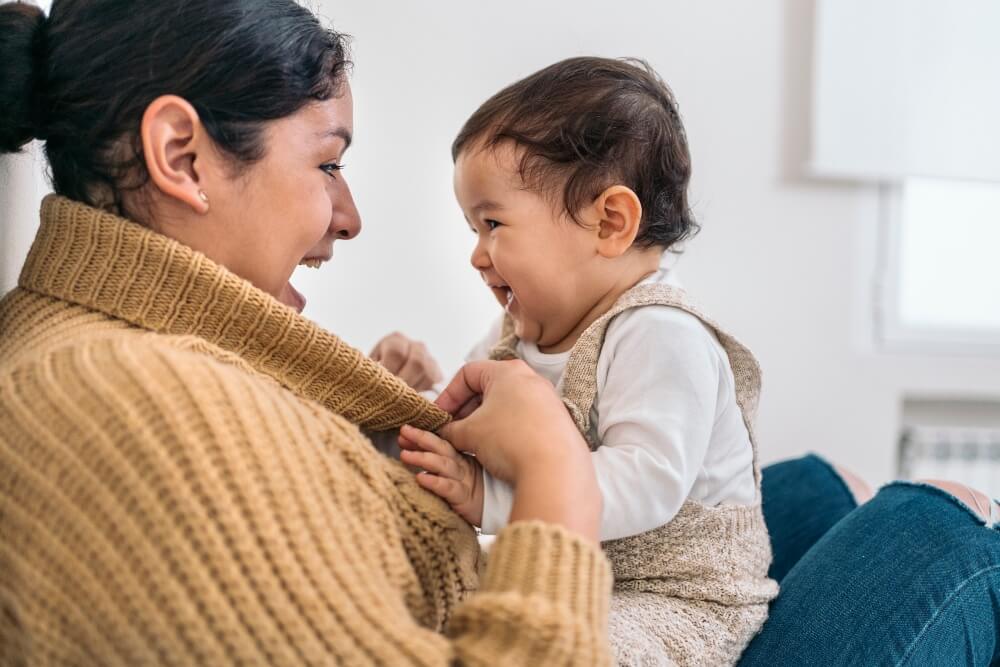
The science of early development helps us understand why these moments matter. Responsive back-and-forth exchanges—what the Center on the Developing Child at Harvard University calls “serve and return”—help build the foundations for communication, social connection, and emotional well-being. A baby reaches with a sound, a look, or a gesture. An adult responds. The child learns: I affect the world. Someone notices. Relationship has a rhythm.
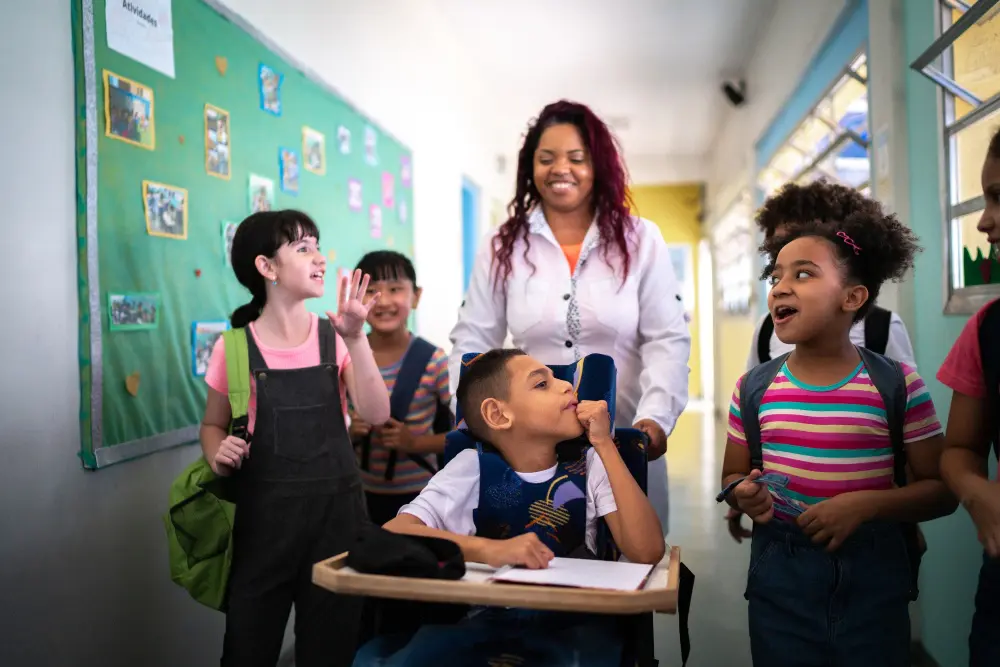
This is where children’s rights and child development belong together. The United Nations Committee on the Rights of the Child has made clear that young children are holders of rights, not simply future adults who will acquire rights later. That distinction changes how we see daily life. Feeding a baby responsively is care, and it is also respect. Listening to a preschooler’s account of what happened is good teaching, and it is also participation. Making a classroom accessible is sound practice, and it is also justice.
What Children Reveal About Us
Young children are careful observers of adult contradictions. We tell them to share, then organize societies around scarcity and exclusion. We tell them not to interrupt, then speak over them. We tell them to be kind, then dismiss the people who care for and educate them as “just” child care workers. We tell them everyone belongs, then create classrooms, neighborhoods, and institutions in which belonging depends on language, race, income, disability, immigration status, or conformity.
Children may not use our policy vocabulary, but they experience our policies in their bodies. A child knows when the bus ride is too long. A child knows when a parent is worried about rent. A child knows when their home language disappears at the classroom door. A child knows when the playground equipment was not designed for their body. Children live where our values become concrete.
That is one reason Erikson Institute exists. Our mission is to prepare professionals to address urgent challenges facing young children, families, and communities through education, research, and advocacy. “Knowledge in the service of children” is not a decorative phrase for us. It is a responsibility. Knowledge must eventually arrive somewhere: in the way a teacher welcomes a family, in the way a social worker understands behavior, in the way a researcher frames a question, in the way a leader builds a budget, and in the way a policymaker decides whose well-being counts.
Big Hearts Need Protected Conditions
It is tempting to romanticize children’s kindness. We should resist that temptation. Children’s capacities for care do not remove adults’ obligations. A child should not have to become unusually resilient because systems remain unwilling to become just. A child’s empathy should be nurtured, not exploited. A young child can help set the table; they should not carry the emotional weight of the household. A child can care about a parent’s sadness; they should not become the parent’s therapist.
They need food, housing, health care, excellent schools, play, rest, cultural belonging, and freedom from violence. They need professionals who understand development and institutions willing to organize themselves around children’s dignity.
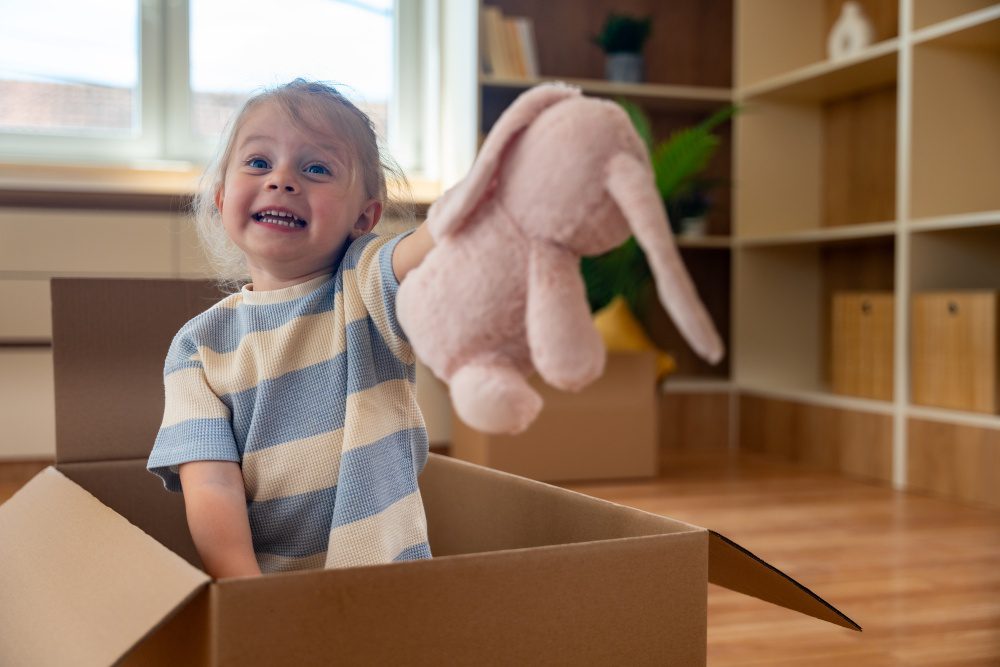
And they need delight. Children should not be discussed only through risk, readiness, intervention, and outcomes. They are funny. They are inventive. They are capable of turning a cardboard box into a veterinary clinic for dragons. They remind us that joy is not frivolous. It is one of the ways human beings recognize that life is worth sharing. The child offering the sandy cracker is not giving us a complete theory of human nature. She is giving us an invitation.
Notice the person beside you. Move toward pain rather than away from it. Share what you have. Do not wait until your offering is perfect.
Little humans have big hearts. Our task is not to admire that fact from a distance. It is to build a world in which their tenderness can survive, their questions can deepen, their rights can be realized, and their humanity can call forth more of ours.
Erikson Resources, References, and Further Reading
• “1,800 Days: The History of Early Childhood in the U.S.”
• “About Erikson Institute.” Mission, vision, and institutional commitments to education, research, advocacy, and lasting change.
• “Early Childhood Research—Applied Research.” An overview of Erikson’s research in the service of children, families, communities, and public systems.
Other Research and Rights Sources
• Center on the Developing Child at Harvard University. “Serve and Return.” Research and practical resources on responsive, reciprocal relationships.
• United Nations Committee on the Rights of the Child. General Comment No. 7: Implementing Child Rights in Early Childhood.
Join the Erikson family with monthly news + events updates shared by academics, community members, and families.
Create a Better Future For Children While Building Yours
Embark on your early childhood graduate program path at Erikson Institute and start changing lives.